

Layered email security is a defence-in-depth approach. It uses more than one security tool to protect business email systems and reduce the risk of modern phishing attacks. Thus, it does not rely on a single spam filter. Security in layers combines traditional filtering with advanced, AI-driven detection to handle both common and highly targeted attacks.
What Is Layered Email Security?
Layered email security protects your email environment using multiple, complementary security mechanisms. Each layer detects different types of threats, ensuring that if one control misses something, another can catch it.
This defence-in-depth strategy dramatically reduces the risk of a successful attack. Besides, it aligns with modern email security best practices cybersecurity authorities recommend. These authorities agreed on the fact that using just one tool is no longer enough.
Why One Email Security Tool Is No Longer Enough?
Many business owners assume that if they have spam filtering in place, they’re protected. Unfortunately, today’s most damaging attacks don’t always look like spam, but they can appear on your inbox as legit emails coming from trusted senders.
Modern email attacks often:
– Contain no malware or attachments
– Use legitimate but compromised email accounts
– Include links that haven’t been flagged yet
– Mimic real suppliers, colleagues, or directors
These attacks are targeted, carefully written, and designed to manipulate people rather than exploit systems. Thus, this is where traditional spam filtering reaches its limits, and layered email security enters the game.
Email Security Layers
Layer 1: Domain-Wide Spam Filtering
The first layer of protection is a robust, rule-based spam filter applied to every mailbox across the domain.
At Shropshire Computers, this layer is designed to stop high-volume, everyday threats before they ever reach Microsoft 365 or Google Workspace.
This layer blocks:
– Bulk spam and junk email
– Obvious phishing attempts
– Malware-laden attachments
– Spoofed or unauthenticated senders
– Suspicious or malformed messages
It also provides important operational benefits, including email search, safe redelivery, permanent blocking, and full visibility over mail flow.
For the majority of users, this level of protection is appropriate and effective, but the reality is that not all threats look dangerous because the most dangerous email attacks today are subtle.
They may appear as:
– A payment request from a director
– An invoice from a known supplier
– A shared document notification
– A “quick favour” that feels urgent but legitimateThese messages often pass traditional filters because technically, they look clean, but they are pretty dangerous. This is when the second layer comes into place.
Layer 2: Advanced, AI-Driven Email Security
This is where advanced email security tools like IRONSCALES come in.
Instead of relying on static rules, IRONSCALES uses AI and machine learning to analyze:
– Language and tone
– Context of conversations
– Sender behaviour
– Historical communication patterns
This allows it to detect threats such as:
– Business Email Compromise (BEC)
– Invoice and payment fraud
– Executive impersonation
– Credential harvesting
– Account takeover behaviour
Why Layer 2 Is Applied to High-Risk Users?
This is because certain roles are more likely to be targeted, including:
– Directors and senior leadership
– Finance and payroll teams
– Accounts and purchasing staff
– IT administrators
A single successful attack against one of these users can result in financial loss, data breaches, or reputational damage that can deeply affect the business.
Applying advanced AI-driven protection selectively delivers stronger security where it matters most, without unnecessary cost or complexity.
Real-World Example: When One Layer Isn’t Enough
Below is an anonymised example of a phishing email that bypassed traditional spam filtering but was flagged by IRONSCALES.
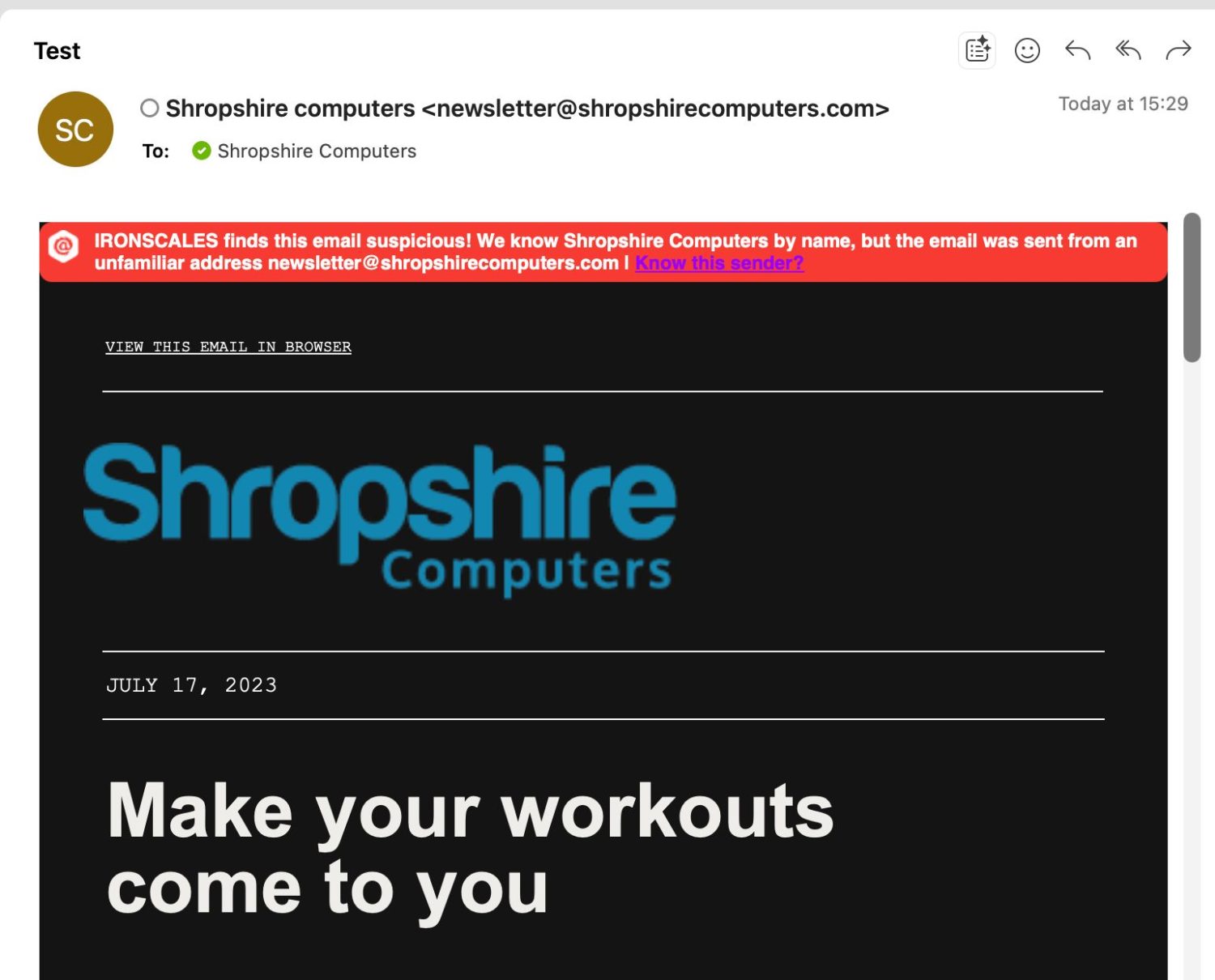
The email:
– Came from a legitimate-looking sender
– Contained no malware
– Used realistic language and urgency
These others are anonymised real-world examples of emails flagged by IRONSCALES. These messages look legitimate, come from real domains, and contain no obvious malware — exactly the type of attack that traditional spam filtering can miss.
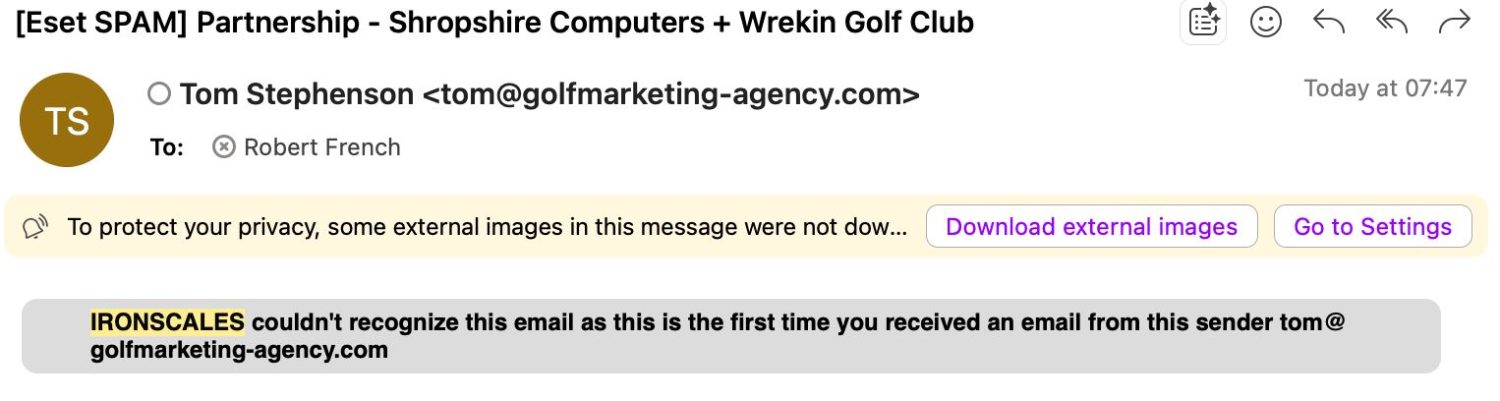
Traditional filtering allowed it through. IRONSCALES analyzed the language, context, and sender behaviour, identified it as a phishing attempt, and flagged it before any action was taken.
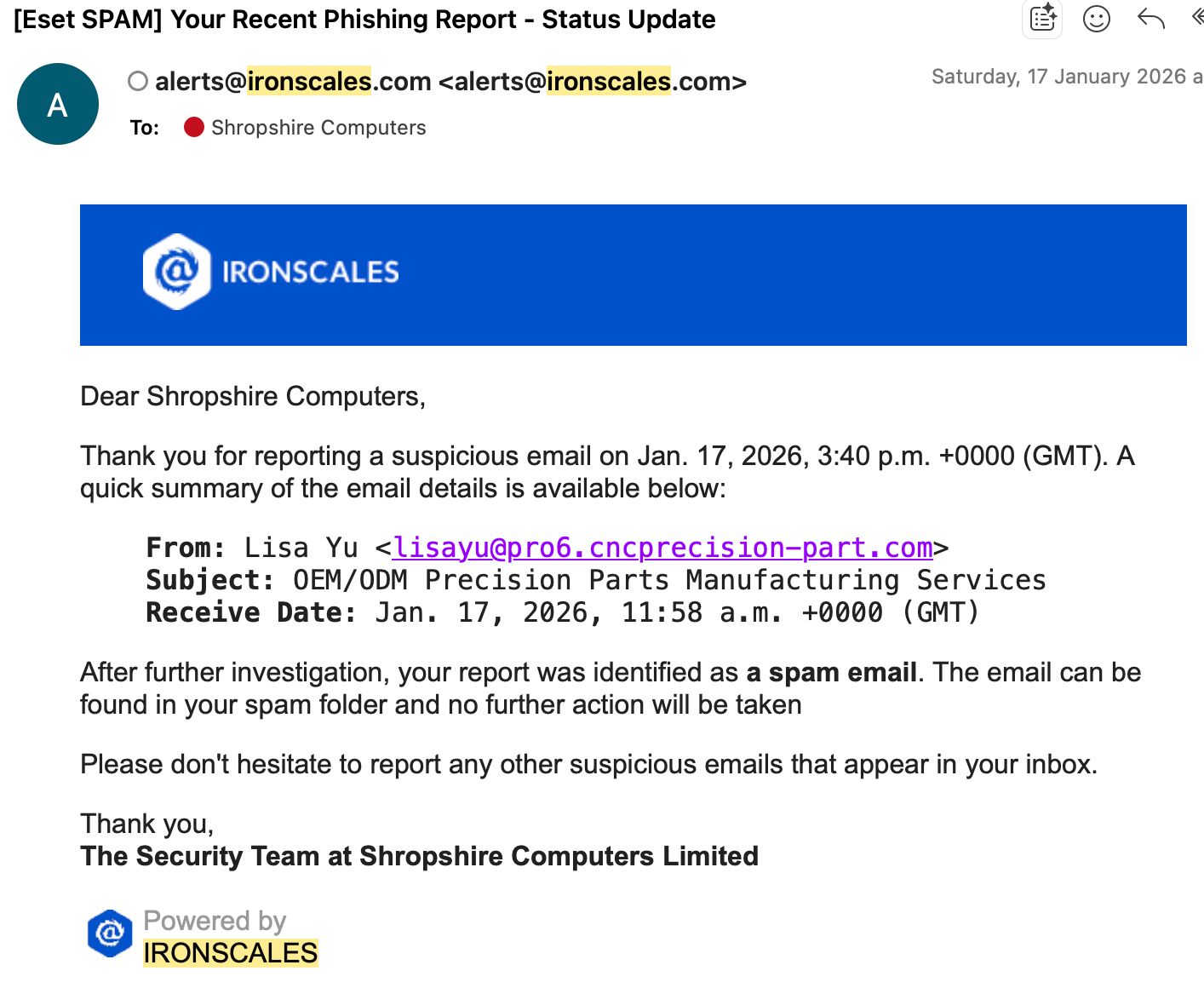
Also, IRONSCALES generates reports and keeps you up to date with what is going on with those suspicious emails that get to the inbox. So, this is beneficial as it reminds you to be attentive to these types of emails.
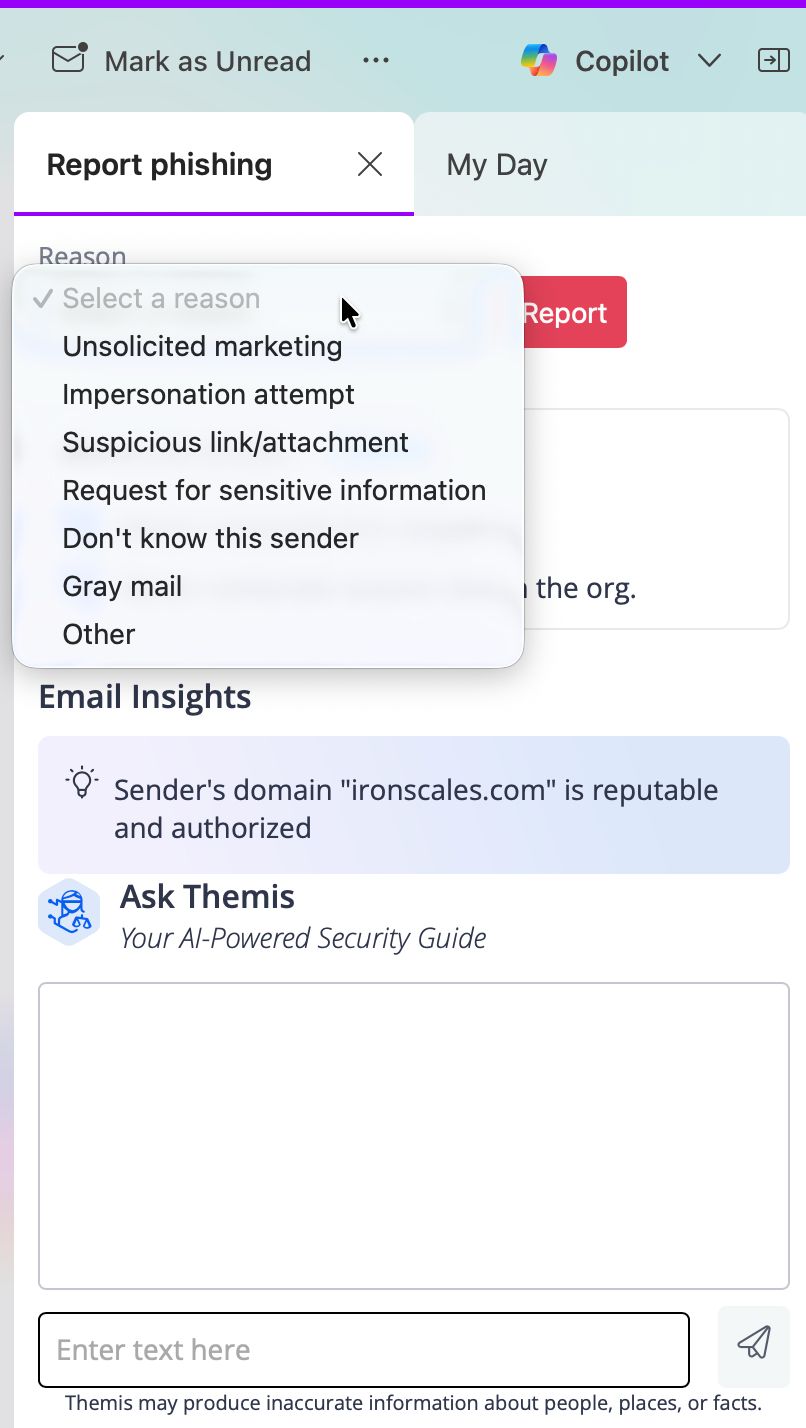
Another important feature is the ability to report phishing for different reasons:
In fact, this is the practical difference between reactive filtering and layered, intelligence-driven protection that goes beyond traditional security to make sure what does not seem dangerous gets spotted and ensure your business keeps safe.
How the Two Layers Work Together
Layered email security works by combining strengths:
– Layer 1 removes noise, spam, and known threats
– Layer 2 focuses on subtle, targeted attacks
– Different detection methods reduce blind spots
– Risk is reduced even if one layer fails
This defence-in-depth approach reflects how modern cyber attacks operate.
Why Does This Matters for Shropshire Businesses?
Small businesses are not too small to be targeted. In fact, attackers often see SMBs as easier targets due to limited in-house security resources these businesses may have.
Layered email security helps Shropshire businesses:
– Reduce fraud risk
– Protect sensitive data
– Maintain business continuity
– Strengthen overall cybersecurity posture
If you’re unsure whether your current email security setup would stop modern phishing and impersonation attacks, now is the right time to review it.
Speak to our team at Shropshire Computers to discuss layered email security and how to protect your business effectively.